
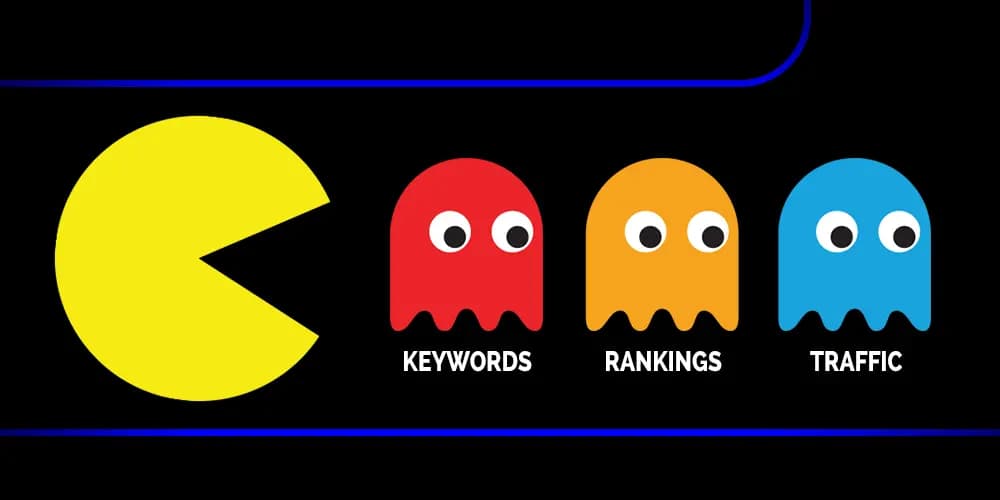
Keyword cannibalization is one of those problems that hides in plain sight. Your site is publishing content, rankings seem decent, traffic looks okay — and then you wonder why you’re not breaking through on that one keyword you care about most. More often than not, the answer is that your own pages are competing against each other.
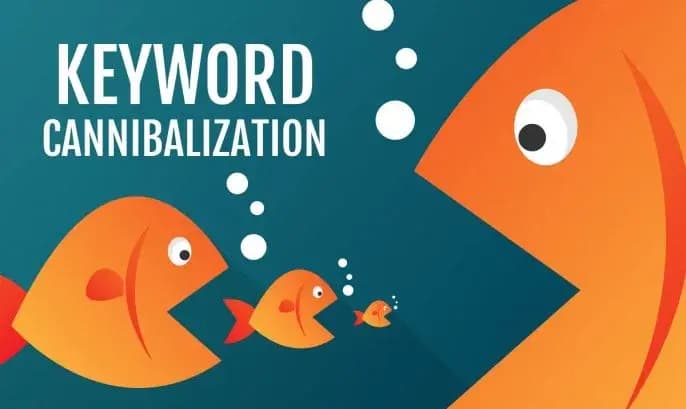
Keyword cannibalization happens when two or more pages on the same website target the same — or very similar — keyword, causing search engines to get confused about which page to rank. Instead of one strong page rising to the top, you end up with two weak ones splitting authority, clicks, and signals. Google essentially has to pick a winner, and it often picks the wrong one.
This article explains what keyword cannibalization really is, why it matters more than ever in 2026, and — most importantly — how to fix it without losing the work you’ve already done.
Why Keyword Cannibalization Happens in the First Place
It rarely happens deliberately. Most site owners don’t sit down and think, “Let me write three articles targeting the same phrase.” It creeps in over time.
A blog that’s been publishing for two years might have a how-to guide, a beginner’s explainer, and a product review — all targeting “best project management software.” Each page was written with good intentions. But from Google’s perspective, they all look like they’re competing for the same search intent.
The root cause is usually a lack of content strategy. Without a clear map of which page owns which keyword, it’s easy to drift into overlap. E-commerce sites are especially vulnerable — product category pages, collection pages, and filtered views can all end up targeting near-identical phrases without anyone noticing.
There’s also a subtler version: semantic cannibalization, where two pages don’t share the exact same keyword but target the same search intent. A page titled “How to Sleep Better” and another titled “Tips for Improving Sleep Quality” might use different words, but they answer the same question for the same type of user. Google sees them as duplicates in all but name.
The Mechanics: What Google Actually Does With Competing Pages
To understand why this is harmful, you need to understand how Google allocates ranking power.
When Google crawls your site, it assigns PageRank — a measure of authority — across your pages based on links, engagement signals, and content quality. If two pages both target “keyword cannibalization fix,” that authority gets diluted between them. Neither page accumulates enough signal to rank well.
Think of it like two candidates from the same party running in the same constituency. They split the vote. The opposition wins.
Beyond authority dilution, there’s a crawl budget consideration. Large sites have a limited number of pages Google will crawl regularly. When multiple pages overlap in topic and intent, crawl budget gets wasted on redundant content instead of discovering new, valuable pages.
Google’s Search Quality Rater Guidelines emphasize page-level purpose. Every page should have a distinct, clear reason to exist. Pages that blur into each other don’t serve that standard — and Google’s ranking systems are increasingly good at detecting it.
How to Find Keyword Cannibalization on Your Site
You don’t need expensive tools to start. A few simple methods surface the problem quickly.
The Google site search method is the easiest starting point. Type site:yourwebsite.com "target keyword" into Google. If more than one page appears targeting the same phrase, you likely have a cannibalization issue. It’s crude but fast.
Google Search Console is more reliable. Filter Performance data by a specific query, then click “Pages” to see how many URLs are ranking for that term. If you see two or more URLs swapping positions — ranking alternately across different days — that’s a clear signal of active cannibalization.
Ahrefs, Semrush, and Screaming Frog all have dedicated cannibalization reports. Semrush’s Position Tracking tool can flag when multiple pages from the same domain rank for the same keyword simultaneously. For a site with hundreds of pages, these tools save enormous amounts of time.
One underrated approach: check your own internal search data if you run a content hub or e-commerce site. When users search your site for a term and land on a different page than you expect, it often signals that your own indexing logic is confused.
The Real Cost: What Happens When You Ignore It
The damage is measurable — and it compounds.
Cannibalized pages tend to hover around positions 8–15 for their target keyword, stuck in a loop where neither page breaks through to the top. In my experience reviewing content audits for mid-sized blogs, fixing cannibalization issues has moved target pages from page two to position three or four within six to eight weeks — without a single new backlink.
There’s also a user experience cost. When Google sends users to the wrong page — say, a thin overview article instead of your detailed guide — they bounce quickly. That poor engagement feeds back into rankings. The spiral accelerates.
For AI-powered search results (Google’s AI Overviews, formerly SGE, and tools like Perplexity or ChatGPT with browsing), cannibalization creates a different problem. These systems extract and synthesize content from what they consider the most authoritative single source on a topic. If your site presents two competing answers, AI systems often skip your site entirely and cite a competitor that speaks with one clear voice.
This is why cannibalization is no longer just a rankings problem — it’s an AI citation problem.
How to Fix Keyword Cannibalization (What Actually Works)
There are four main fixes, and the right one depends on the specific situation.
1. Consolidate (Merge)
If two pages cover the same topic with similar depth, merge them into one comprehensive page. Redirect the weaker URL to the stronger one using a 301 redirect. Update the surviving page to incorporate the best content from both. This is the most common fix, and it almost always produces a rankings lift.
2. Differentiate the Intent
Sometimes the pages can coexist — they just need to serve clearly different intents. A beginner’s guide and an advanced technical deep-dive on the same topic can both rank if they genuinely serve different audiences. Rewrite and repositions each page so its purpose is unambiguous. Adjust titles, headings, and internal links accordingly.
3. Canonicalize
If two pages must exist for technical or structural reasons (think: e-commerce filtered views), use a canonical tag to tell Google which version to index. This doesn’t solve the underlying content overlap, but it does consolidate ranking signals to the preferred page.
4. Noindex or Delete
For thin, low-quality duplicate pages that add no real value — outdated articles, near-identical product variants, paginated archive pages — the cleanest solution is often to noindex or delete them and redirect traffic to the canonical version.
One practical note: before deleting anything, check the page’s backlink profile in Ahrefs or Semrush. If a weak, overlapping page has strong external links pointing to it, redirect it rather than simply removing it — otherwise you lose that link equity entirely.
Keyword Cannibalization in the AI Search Era
Something shifted in 2024 and 2025 that most guides haven’t fully processed yet.
With Google’s AI Overviews appearing for an expanding range of queries, and AI assistants like ChatGPT, Gemini, and Perplexity increasingly being used as research tools, the concept of “ranking” is evolving. It’s no longer enough to appear on page one. You want to be the single, definitive source that AI systems cite.
Cannibalization actively works against this. When Google’s AI crawler encounters multiple pages on your site addressing the same query, it faces the same dilemma a human editor faces: which version is the real answer? The result is often that neither page gets cited, and a competitor with cleaner content architecture takes the slot.
The fix is the same — consolidate, differentiate, canonicalize — but the urgency is higher. In the AI search landscape, content fragmentation is penalized not just in rankings, but in citations. And citations, in 2026, are where a growing share of traffic originates.
Structured data (Schema markup) also plays a role here. Pages with clear FAQ schema, Article schema, and breadcrumb markup give AI systems explicit signals about the page’s purpose and authority. A well-structured single page consistently outperforms two thin, overlapping pages in AI-generated answers.
Building a Cannibalization-Proof Content Architecture
Prevention is easier than repair.
The most effective preventive tool is a keyword map — a simple spreadsheet assigning each target keyword to one and only one page on your site. Before publishing any new content, check the map. If another page already owns that keyword, either differentiate the angle clearly or update the existing page instead.
A few principles that hold up well in practice:
- One primary keyword per page. Supporting keywords can overlap across pages, but the primary focus should be unique.
- Internal links should reinforce hierarchy. Link from supporting pages to the canonical resource, not between competing pages.
- Audit annually. Content libraries grow, old pages get forgotten, and cannibalization re-emerges. A yearly content audit using Search Console data catches problems before they compound.
- Topic clusters work. Organizing content around a pillar page with supporting cluster pages naturally reduces cannibalization because each piece has a defined role.
The irony of keyword cannibalization is that it usually stems from too much effort — lots of content, lots of good intentions — without enough structure. It’s not a laziness problem. It’s an architecture problem.
Frequently Asked Questions About Keyword Cannibalization
Q: Does keyword cannibalization always hurt rankings?
Not always immediately, but it creates instability. Pages affected by cannibalization tend to fluctuate in position unpredictably, hovering in the mid-rankings without ever breaking through. Over time, the dilution of authority accumulates and consistently limits performance. Consider it a ceiling, not a floor.
Q: Can internal linking cause keyword cannibalization?
It can make it worse, but it doesn’t cause it alone. If you link to multiple pages using the same anchor text, you signal to Google that these pages are equally relevant for the same term — which reinforces the confusion. The fix is consistent anchor text pointing always to the canonical page for that keyword.
Q: What’s the difference between keyword cannibalization and duplicate content?
Duplicate content means pages share near-identical text. Keyword cannibalization means pages share the same target keyword, even if the actual content is different. Both hurt, but they require different fixes. Duplicate content is addressed with canonicalization; cannibalization usually requires content consolidation or intent differentiation.
Q: How quickly can fixing keyword cannibalization improve rankings?
In most cases, improvements show up within four to eight weeks of implementing fixes — particularly if you consolidate pages and update internal links. The speed depends on how frequently Google recrawls your site. Sites with higher domain authority and regular publishing schedules tend to see faster recovery.
The Bottom Line
Keyword cannibalization is one of the most common and most underestimated SEO problems. It doesn’t announce itself. It doesn’t throw errors. It just quietly limits what your content can achieve, holding pages in a permanent state of almost-but-not-quite ranking well.
The fix isn’t complicated. Map your keywords, audit your content, consolidate where you’ve overlapped, and build with structure from now on. In an era where AI systems are increasingly the gatekeepers of traffic and citations, speaking with one clear voice — not ten competing ones — is the difference between being cited and being skipped.